Morning Meeting

My way of getting our homeschool day started right.

Probably my favorite homeschooling habit has been the Morning Meeting. Here’s my personal schedule as I’ve entered it in my Homeschool Planet planner for the week, with a few things made up or left off for privacy:


For several years now, since I’ve had kids big enough to learn to show up for things on time, we’ve had a “schoolroom by 9 a.m.” rule. This was scandalous to one of our public schooled friends. “You’re home all day and you still have to get there on time?” Well, yes. Being a functioning human being includes knowing how to show up on time and ready for your task. My students are expected to have chores done, get dressed, and get into the schoolroom before I do. That’s not too much to ask, especially since I’m usually a little bit late getting there myself. My morning routine isn’t the same as theirs. After I make breakfast, I take time to work out and get ready while they eat and do their chores. So if I’m late, that’s fine, they can get started on the assignments from their printed lists.

At nine o’clock, or whenever I manage to get my Teacher Hat on, we’ll start off with prayer, Bible-reading, and whatever subjects can be taught to all ages simultaneously. Everybody does creative writing to his own level, we all study the same artist, portion of Plutarch, theology reading (currently reading parts of Calvin’s Institutes), music study, etc. It’s very much like a one-room schoolhouse would have been, I imagine.

After whatever we’re doing together is finished, I’ll ask individuals in their turn to narrate from their readings, turn in earlier work, and ask any questions they may have about their days’ schedules. Then I teach the smaller classes, like Charlotte Mason Practical Geometry for the youngest three, or Apologia Botany for my youngest two. Older children are dismissed to work on their independent work. I may need to schedule individual meetings some days. I did that for several years. But for the first few weeks this year, I’ll just take the kids as they come to me and see how that goes. I only have five kids left, so it doesn’t seem as important to schedule specific times for them this year.

If we get that first hour or two together, the rest of the day usually goes well. It gets me and everybody else centered, and we feel hopeful because we’ve already gotten so much done so early. Once we’ve done all this, I can go off and do household things or whatever else I need to do, and still be available for answering questions, solving the unexpected problems that always crop up, and hearing narrations.

We are usually finished with school things by lunchtime, though the high schoolers sometimes have more to do afterwards. In the afternoons, I still expect them to be productive, except for their allowed screen-times. This routine keeps us together as a family/school, as well as making sure everything gets checked off the individual lists.

I can’t stress enough how important it is that we start our day off with worship. I don’t even have that written on our lists, as if it were just a thing to check off with the rest of it. It’s not. Jesus will always be our One Thing, and our First Thing.

How about you? Do you have a version of a Morning Meeting? I’ve dreaded having fewer students as we get older, because I’m not sure the MM will work as well with fewer people. But for the last ten years, and for the next several, it will definitely continue to be our routine. Really soak up these years, parents. They are graduated and you’re “free” in the blink of an eye. These moments are too important not to schedule.

This post contains affiliate links. If you click and then purchase, the blogger may benefit at no extra cost to you. Thanks for reading!


Resources for the School Year

Since I told you what kind of mess I’m making this school year, I thought I’d point you to some of the resources I draw from:

I’m using Ambleside Online for our core. There is a lot of community there–more than I’ve taken advantage of, even. Just go poke around a while and see what you like.

To keep costs down, we buy most of our books used from Thriftbooks and Amazon. If you use AO’s schedule, I hope you’ll also click through their affiliate links in the booklists to help keep that vital site alive.

Simply Charlotte Mason has a lot of my favorite resources. If I were starting my homeschool from scratch, I think I’d just buy one of everything.

Instead of the AO artist schedule, I use Picture Study Portfolios from SCM, one new work of art per week. They have a nice book to read about the artist, so I break that up into a weekly reading of a few paragraphs until we’ve gotten through the portfolio. This term, we’re doing Hokusai, since it lines up with one of the children’s history readings.

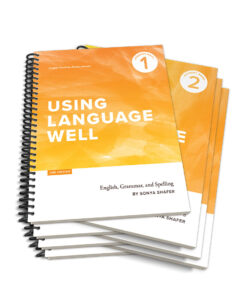
Using Language Well, also from Simply Charlotte Mason, is our grammar, spelling, and dictation.

I’m also starting to use the Art of Composition books from SCM this year for my older students.

For handwriting, I use Handwriting Without Tears.

We’d always used Math-U-See and Saxon before, but this year I’m doing an entirely Life of Fred approach. I expect that to be a lot of fun.

For Latin, I’m still unsure which program we’ll start with. I have Wheelock’s Latin, as well as some other stuff. As a supplement to whatever we use, we’ll add analyses from Digital Monastery. There’s a book available now, Praying in Latin, that I’ll dip into for our morning meeting prayers. I’ll hopefully get time to review that soon.

Suggested reading for moms and dads:

Laying Down the Rails and The Lost Tools of Learning to help us think about this massive endeavor we’ve taken on.

Dumbing Us Down to put some steel in our spines for those days we’re tempted to put this difficult job off on the school system. And the Holy Bible, most importantly. You’re not gonna get anywhere without that.

All of this stuff gets organized in the Homeschool Planet Planner. I had been reluctant to pay for an app to organize things, having plenty of paper and pens at hand, and being kind of old and set in my ways. But my friend Alex sold me on it, and it has been a very pleasant way to plan and keep on track. In addition to scheduling and planning, there’s a transcript service and 4 year blueprint for keeping track of high school requirements. Worth every dime to me! I think there may be some features I’m not using to the fullest yet, but as far as I’ve explored, it’s been great!

Along the same lines, I’ve caught wind of this new app called SpeedyRecord. If it works the way I think it does, it could be super helpful for those of us who hate keeping records of what was done, grading, and making transcripts. I don’t know if I’ll implement it this year, but it’s on my “interesting” list.

That’s probably enough linkage for one day. I hope some of these links give you ideas for your own homeschool!

Some of these links are affiliate links, and some are not. Clicks through may earn the blog a few percents of your purchases. Thank you!


Our “Hot Mess” Homeschool Plan

A little bit of a ramble, and some useful links.

I think maybe, since homeschooling is, in fact, a hot mess right now, some newer homeschoolers might like a look at what this household is up to. Some homeschoolers might look at what I’m doing and shake their heads and silently walk away, perhaps throwing some paper flowers made of standardized tests on the casket of their hopes for instruction on “success” as they walk by. To each his own. While we are heavy on intellectual development here, we’re not traditional about it. People who seriously want their kids to be schooled will need to look elsewhere. We’re not quite unschoolers, but we’re not much interested in jumping through the hoops to prove ourselves, either.

There are more impressive people to follow. Believe me, I know. Not a single one of my kids has finished a course in Latin yet. A lot of new homeschoolers probably need permission to be ordinary, so I’m going to give out some permission slips for that today, free of charge.

When we first started out–lo, these 17 years ago!–we tried a lot of different approaches. We started out with Sonlight (just boring), then tried Tapestry of Grace for a year (too expensive, a little bit textbookish), and then I discovered Charlotte Mason through a blog by the late Wendi Capehart. While I wouldn’t consider myself the purest CM adherent, I do like the way of thinking about children, habits, and the living books approach. This method also appreciates that education consists of all kinds of work and play, all day long, and is not just about academics.

We really have been a hot mess, if you look at the whole timeline of Hillside Christian Academy. I’ve gone from Teach Your Child to Read in 100 Easy Lessons in the early days to McGuffey’s Readers now. While I vastly prefer the latter, the former did get my older kids reading, so I can’t really say I’m sorry. One of the hardest things for me as a mom of a wide range of ages is wishing I could go back and try a different approach with my older kids, just to see if they would have done better. Honestly, I don’t think it mattered which way I did it. Each child has needed different things, and we’ve adapted everything as we went along anyway.

When I finally found Ambleside Online, it clicked for me, but I’ve still changed all sorts of things as I found it didn’t suit us. We started out all wrong. Sonlight is absolutely fine! So is Tapestry of Grace! But not for us.

You’re going to choose a lot of suboptimal things (for you) at first, too, newbies, and that’s fine! Your kids will survive that. Do go out into the homeschooling community, whether online or IRL, and find somebody who has done this for a while–several somebodies–and see what they’re doing. But don’t get too attached, because they are not you. Their kids are not your kids. Their approach will not fit you perfectly. If inexperience is a disadvantage, it is also an advantage! People who have no idea what they’re doing often discover something nobody else ever would have considered, and that discovery is the thing that makes them successful in their own way!

So shake off your nerves–you don’t have anything to prove to anybody--and just start doing something. You’ll figure it out as you go, the same way I did.

If you’re thinking of using a Charlotte Mason approach, the first thing to do is read a living book about it! You can, of course, read Charlotte Mason herself, but I’ve found Laying Down the Rails, By Sonya Shafer, to be quicker for getting up to speed, especially establishing the habits that you’ll need to lay down, even if you’re not going full CM. If you don’t want to read a book, you can certainly go buy a pre-rolled curriculum, and there is nothing wrong with that, either. I’m am completely ecumenical about schooling styles. This might not work for you at all.

Here at the GAHousehold, our core curriculum has been drawn from Ambleside Online, but I substitute a lot of our own books, especially in the upper grades. For instance, I have yet to get a girl to like the book Robinson Crusoe, so even though it doesn’t quite fit the rest of the plan, I’m switching that book to something less repulsive to a nine year old girl.

I have a couple of children reading in the Civil War era this year. I learned with the first three kids (who have graduated now) that AO is lopsidely, maddeningly Yankee-centric. It is also fairly England-centric in the early years. I actually like that. But they’ve changed a bit over the years to make it a little more rounded, and it’s hardly noticeable at this point. I’ve added Lincoln Reconsidered and a few biographies of great Southern men, because the Narrative I want my kids to have wouldn’t be complete without those other points of view.

If you’re new to homeschooling, or AO, there’s no harm in going with the plan as written. But one thing homeschoolers are going to do, God bless us, is go off-plan. I’m just showing you a few of the ways I have done so. You don’t have to follow along.

AO doesn’t provide everything I need, of course. I’ve decided to kick traditional math texts to the curb after years of Saxon and Math-u-See, because all of my kids, even though they’re good at math (all but that one, anyway), hate math. That’s just not cool. So we’re doing Life of Fred exclusively this year, and quite looking forward to seeing how that goes. We’ve had the books on our shelves, but somehow never incorporated them. It might be great. Might be the worst idea I’ve ever had. I’ll definitely update you on that.

I’m getting back out a Latin curriculum for this year, and we’ll see if anybody of the right age likes it at all. If not, I’ll put it away again until the two youngest are old enough to try. We have a language requirement every year, and my second born is quite the linguist! I think he’s up to six languages he reads and understands now, though he has nobody to converse with. But he still didn’t want to do Latin. That’s where the un part of my schooling comes in. I don’t make people finish things they hate, nor are there any subjects so important that I won’t find a different way to fulfill the requirement if things aren’t looking good after a few months.

I have a lot of resources to talk about in a further post, and I hope you’ll have questions to drop on me, either in the comments here, or by email. Happy homeschooling, friends! It’s almost time to get started!

This post contains affiliate links. If you click and buy anything, I’ll get a little kick-back, and thank you very much!

Is Homeschooling a Hot Mess?

Who doesn’t love a hot mess?

I recently stumbled across a substack post by someone I assume supports homeschooling called “Homeschooling is a Hot Mess”. Possibly to my detriment, I didn’t read much of it, nor am I conscientious enough go back and find out if my impressions of where it was going are fair or accurate. It probably went far better than I expected it to. No shade on the writer at all, I was just really busy that day, and now I’m on to something different. What that post did, though, was spur this sorry blogger on to consider a presumably different topic I’ve touched on over the years. I thought I’d piggyback on just the title, since it was such a banger.

Is homeschooling a hot mess? Are we failing before we even get started?

Our family held a graduation ceremony and party for our third-born child last weekend. It was a nice to-do (though I wish I’d done better with the brisket), and now I only have five students left. Having three more-or-less mature people to show for my efforts, and having hung out with many other homeschooling families these seventeen years or so, including the newest crop of public school refugees, I guess I’m at least somewhat qualified to talk about homeschooling’s current condition.

In an older post, Permission to Be Ordinary, I made a prediction:

The first generation of homeschoolers was almost certainly an unusual group of people. It seems to me that they required a unique set of characteristics–qualities that usually go hand-in-hand with high intelligence and academic achievement–to be able to boost the homeschooling movement from the gravitational pull  of traditional education. That first generation had, at the very least, enough imagination to dream it up, confidence to follow through, ingenuity to figure out how, resourcefulness to keep it going under pressure, and courage to fight the courts and social stigma.

As homeschooling becomes more mainstream, though, we are going to see some regression to the mean (though I doubt that we could ever regress to the abysmal performance of public schools). Because homeschooling really is a viable and superior alternative, and for reasons that have little to do with math, more and more parents who would never have considered such a thing before are going to jump on the bandwagon.

Those stellar statistics are going to level out, homeschoolers.  At some point, our neighbors are probably going to notice that some of us are pretty awful at math and science, and most of our children are going to trade schools or straight to the workforce instead of to Harvard. For that reason, it would be good if we kept our debating skills sharp, so that we can explain why homeschooling is well within our rights, regardless of our outcomes. If our best defense of home education is that other homeschoolers are really smart, we are sunk, because most of us are going to be graduating children who become ordinary people.

If you hadn’t heard it before, “regression to the mean” is a term (though I’m being flexible in my use of it) meaning that we can expect extraordinary data to smooth out as the thing that made them extraordinary mingles with the ordinary. What can’t last, won’t. Initial measurements contain different and fewer data points than later ones.

Early homeschoolers have less in common with later homeschoolers than later homeschoolers do with the public school population from which they are drawn.  

We will regress to our mean. I stand by that prediction. But I don’t think that’s what’s happening yet. Right now, most homeschoolers are not even homeschoolers. They’re public schoolers brought home. This is not where we’re going to settle. Right now I think what we see is more like a tidal wave sucking the water from a shore before crashing back in, or a pendulum swinging. Whatever metaphor you like best, what we’re seeing right now–everybody trying different things, infighting, chaos inside and out, and some parents doing a very poor job while others are crushing all expectations–is, indeed, a hot mess. It’s a mess caused by a whole bunch of new people jumping in to something they’ve yet to understand. They panicked. That is completely understandable, and now they are completely unprepared.

This was bound to happen, as people began to finally discover that public education is every bit as bad as the first generation of homeschoolers said it was. The pendulum is still swinging, or the tide is going to come back and cause some devastation, or the dust is going to take some time to settle, choking us for a while. Please forgive all my conflicting metaphors. My point is that we can’t really judge the thing right now. People need time to figure things out.

Whatever they do, they cannot do worse in the aggregate–individual results notwithstanding–than the public schools have.

Our nation has done a very bad job with its children for a very long time. There is no way to straighten this mess out without bringing it home first. Just let it be what it is and stop worrying. Homeschooling will have results and methods as widely varied as the families themselves are. We will not turn out a uniform product. We have no assembly line or precise formula. We’re turning out souls, not cogs. As in my previous posts on the subject, I call on homeschoolers to defend, not the process of homeschooling, nor their preferred method, nor their results, but the right and duty of parents to raise their children free of interference by the competing, coercive system of secular education.

God has ordained each parent to do this. We can do this.

This post may contain affiliate links. If you buy through them, we may earn a commission at no additional cost to you


The System’s Children

Socialization is the reason we homeschool.

People used ask me all the time why we homeschool. These days, everybody knows why, and I’m more likely to receive their apologia as to why they don’t than queries as to why we do. I have a book’s worth of good material after many years of answering that question. I get bored easily, so I’ve made a game of trying never to use the same answer twice. Here are just a few of our reasons, all of them true and worthy:

  • We believe it is our responsibility as Christians to give our children an unsullied Christian worldview.
  • We want to be more involved in our children’s lives than the school schedule can permit.
  • We enjoy hanging out with our kids.
  • We want to avoid bullies and bad influences.
  • We want better, more personalized academic choices.
  • We don’t want to get out of bed early enough to catch a school bus.
  • We certainly do not want to have to drive and drop off that many children at two or more schools every day.

Can you imagine getting a large-family number of kids ready for school every day? *shudders*

We’ve found so many good reasons to homeschool over the years–some weighty, some very light indeed–that I’ve never had to really explain what my own First Cause was. The more distance I get between my first inkling that we would homeschool (pretty closely following the day I found out I was pregnant for the first time) and today’s understanding (after 21 years of motherhood, I could list literally a thousand reasons to homeschool), the more I realize that the answers we usually give are, while perfectly fine, much lower in importance than the one I’ve kept closer to my heart, where the idea–nay, the heart-need–started.

Of course, nothing can be higher on the list than the desire to please our Father in Heaven, but this need flows directly from that, as it concerns the spiritual and emotional well-being of children. It really does all come down to that question most annoying to all homeschoolers: What about socialization?

The truth is, everybody is socialized.

After nearly a couple of decades of homeschooling, after seeing the differences in the way hand-raised children and schooled children behave, and after the massive explosion of homeschooling since 2020, I had naively thought the socialization question would be put to bed for good. It’s been a few years since anybody asked me about that–so long that I don’t even have any posts on the new version of the blog that I can quote or link to. But someone worried recently to one of my teenagers, during an ironically cordial and lucid conversation that gave the lie to the very words coming from the lady’s mouth, that she and her siblings are not properly socialized.

My teen looked the person in the eye, argued clearly her own opinion, and came away from the situation with the respect of the questioner. Is that not good socialization? How about the ability to work a grown-up job among people who swim in the main stream, and remain on good terms with everybody and get the job done well? Is that socialized enough? Able to speak with and relate to people in all stations and stages of life? Able to see the world entirely through a Christian lens? I certainly haven’t witnessed that kind of socialization among very many public schooled kids!

I’ve concluded that what they mean by “socialized” is “made compliant with my group”. One Boomer even called my daughter “brainwashed” over something very mild indeed: a disagreement over whether the piano she plays needs to be replaced or not. It didn’t make sense in the context of the conversation, so I can only conclude that this is just what he thinks of our family generally. I could recount other proofs of this attitude around us, but that will suffice.

If conformity with a group is the kind of socialization they mean, I’m happy to inform them that, yes, my children are socialized very well indeed. They’re just not socialized to the System.

System Kids

My daughter (the same one) was recounting a conversation she’d had with a co-worker recently. She is not at all shy about telling people that when she “grows up”–she’s pretty grown up already–she wants to be just a mommy. One co-worker of hers said at some point, in an apparent dig at the girl I’m so proud of, that she was going to go get a “big-girl job”. We both kinda laughed that off. Working women have no idea how immature and clueless homemakers often find them–with their girl-dinners and big-girl-panties and girl-bossing–and their apparent complete inability to imagine what they would do with themselves all day without somebody clearly defining their role in the System. I knew a mom once who couldn’t break the programming. She left the SAHM life because, and I quote verbatim, “I just want somebody to tell me what to do.”

I was thinking about that girl-language today’s young women use. Always girls, hardly ever women, and certainly never ladies. In fact, “ladies” seems to be a condescending, angering word to many of them. I’ve gotten some looks for saying “Hi, ladies!” to groups of younger females. Why do they react this way?

I think I’ve worked out why: This is the language they have to use to soothe and motivate themselves, because it is the language their own parents and teachers used to soothe and motivate them. As they cried not to get on the school bus, or not to go to the daycare, or not to have to go to school while they were facing their first periods, they had to ignore every felt need and go be big girls now. As they shed all of their feminine nature to go out into the world and do what they’ve been made to do since the first day they went to kindergarten, they learned to invert what it even is to grow up into a woman.

They are adults, but they were never given a chance to actually grow up. They were trained, indoctrinated, and sexualized, but not grown up. They’re the System’s kids and most of them always will be. Every day, they have to remind themselves that they are big girls, so they can go out to do what big girls do.

My Story

When I was a little girl, my mom stayed home with us until we children went to kindergarten. She was and is a gentle and sweet soul. I don’t know if anybody could embody motherly love better than she has. I mean none of this to blame her for not homeschooling me in a day when very few had ever even heard of such a thing. She was making her best choices with the information she had, and I have done the same.

I remember the first day I got on the bus. I was as excited as any child could be. Then when I got off the bus at the end of the day, happy but relieved to be home, I heard a bunch of the big kids laughing at me. Not having been told what apparently every other child was born knowing, I had come around the back of the bus instead of the front, and that provoked some very loud laughter and name-calling through the open window.

I realized then for the first time, very poignantly, that there were strangers about. I didn’t know any of these people, nor did I feel safe around them. I didn’t know the word “dehumanized” yet, but that’s how I felt. I don’t have many more school memories until second grade, in Mrs. Tugman’s class, so I guess the rest of the next two years was fine.

Mrs. Tugman spanked me a lot. She spanked everybody. I’m sure I’m not the only one who received her mistreatment. But that year, I was the literal whipping boy girl. Everybody else was left alone after she decided I was the kid who really needed her attention.

The first time she paddled me, it was because I had repeatedly gotten a math problem wrong. I wasn’t paying attention to my symbols, and just kept adding instead of subtracting every time she sent it back to me. It was a two digit plus two digit problem, and I was so focused on the carrying that I didn’t notice I was doing the wrong operation. She certainly could have just pointed that out to me, but she was hell-bent on making me guess why I was getting it wrong over and over and over. After she spanked me, I understood my mistake, so I guess she decided I was keeping my brain in the seat of my pants, and that was the only proper way to deal with me thereafter.

The other times she spanked me, though, it was for crying. I didn’t make many more math mistakes after that. But I displayed anxiety, and she got angry about that. Which, of course, led to more anxiety. Now, understand, I was not throwing temper tantrums. I was trying to hide the fact that I was about to cry.

I was scared. I was scared I’d get on the wrong bus. I was scared that one of the big kids on the bus would be cruel to me. There had already been hints that there were ugly things going on in the back of the bus that I didn’t understand, so I was scared there’d be no seat near the front by the time I found my bus. I was scared my mom wouldn’t be home when I got there. She always was, but my imagination disposed of her in a thousand different ways between the time I left home and the time I got back. I was scared I was going to mess up another math problem. I was simply scared, all the time. You can say, as many did and more will when they read this, that a child has to learn not to be scared. But those were rational fears. I wasn’t scared of an alien abduction. I was scared of real dangers, but had no agency to remove myself from the threat in any way. I was six, and I was alone. My only authority figure didn’t care about me, and in fact actively despised me.

Thankfully, we changed schools in the middle of that year and went to what I still believe was a very good school, as schools go. I often wonder who Mrs. Tugman turned her baleful eye on after I was gone. The other children at this school, save those few that I knew as neighbors, were unpredictable, and often cruel because I was quiet. I was gifted, and the teachers saw that, so I was really blessed in a way that other kids might not have been. I was allowed to sit outside the classrooms to draw or write, or go to the library and read books at my own level. I was allowed to go tutor smaller children, with whom I was not at all scared to engage, as long as I understood the purpose for it.

I was a particularly sensitive and imaginative kid, and school made me extremely anxious. It made me so anxious that I had full-blown selective mutism. I became an object of interest to the school psychologist, who spent an hour or two every week with me. I could not speak in this unsafe place. No amount of smiling and encouraging by my teachers was ever enough to break my silence.

I’m not telling you this because I think I was some kind of special kid. I wasn’t. That’s my whole point. I went on to have some good teachers and some bad. I learned to hide in books and imaginations of my own. I learned to talk later on, too, though it was always forced. Sometimes forcing myself to speak turned to anger instead of tears, getting me into trouble and confusing everybody involved, including myself. I made good grades. In a lot of ways, I adapted just like every other kid.

Finally, I had been socialized.

I was stuffing real, earnest needs away because nobody would address them. How could they? I couldn’t even articulate them! I’m not the only child that ever went through that, not by a longshot. Every child being thrown into an impersonal crowd of other children with barely an adult in sight is going through this at some level. They just either don’t feel it or, when they do, they are easily convinced that this is the way it should be. I simply had a more introspective nature, a better vocabulary with which to store up my thoughts, and a willful nature that would not accept explanations that didn’t fit my observations. By the time I got home, I was able to forget everything and be a happy kid! So down in the memory-hole all that feeling would go, until the next morning. My parents never even knew anything was wrong. I got “sick” a lot. Stuffing feelings does that to a child. They’re not malingering. They’re heartsick.

Ripping me from my family at that stage was completely developmentally inappropriate. It was a real trauma. But it was not just developmentally inappropriate and traumatic for me.

Every Child’s Story

This education system is developmentally inappropriate to all children. I was just more sensitive to it. I understood, in a way that escapes most 6 year-olds, that I was in a place full of strangers who only “cared” for me because they were paid to, who had me jump through their hoops because they were the only hoops they had. Dress what a teacher does up in however many lovely words you like, the fact is that there is no personal relationship to be had there. If there is a personal relationship, it is inappropriate. But children are persons! Young children need close contact with the real love of a mother for much longer, both in years of age and in hours spent each day, than they are allowed in this system.

Now, I did have teachers who were perfectly lovely people, and Christian in their intentions. I consider my education to have been very good for the poor region we lived in. It was fairly Christian, even, and especially good compared to what the schools teach now. But that the classroom is a stultifying and impersonal place that smothers learning and the human connection was still true, even in those very good schools.

I could only be in a given teacher’s class for a year, sometimes two because the classrooms were mixed-grade, and then I would move on. Then in high school every subject was taught by a different teacher. Even there, I was again lucky to be in the gifted classes so that the teachers got to know us in a more intimate way. But I was marked to be a hoop-jumper, a test-taker, a problem to be solved, even there. Never a soul really knew me. The System only cared about getting me on the track that would program me for its own best use.

I resented that depersonalization of my Self very deeply, so when the time came to begin to teach my own children to read, write, and think, I committed to their spiritual and emotional well-being above all of their academic needs. We can do all that school stuff, that career stuff, but it will never be the true goal. I want my children to feel known. I want them to feel safe, and not traumatized into compliance with the System.

Public school is destructive to the finer nature that many children are born with. It is probably nature, much more than nurture, that makes a child sensitive or hardy. I won’t try to figure out in this post how most kids go through that grinder without breaking down as obviously as I did. Lots of reasons are worth exploring in another post, perhaps. The fact remains that those other children are being robbed of intimacy, too, whether they seem happy or not. I feel like one of the lucky ones because I was unable to finally, fully assimilate like the rest.
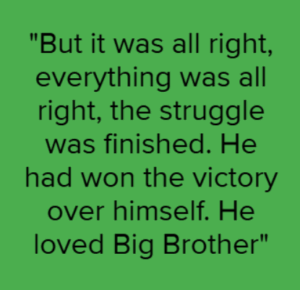
Many will read this and say “Well, I came through it just fine! In fact, it was good for me!” They believe that only because their indoctrination–one might call it brainwashing–was indeed completed. They became the System’s kids.

Many more children go into school sensitive and thoughtful than come out of it that way.

The System, from the first day that sweet little guy walks into kindergarten, works to rough up the very finest mind into the only kind of material the Machine can use: coarse and unthinking. He’ll learn all the alphabet, and something else besides: that his needs must be subsumed to the needs of the whole classroom. He is never anybody’s first concern. It is the separation from the family, and especially a loving mother, that does the most harm to a child’s spiritual development. I don’t care how Christian or kind you think his teacher is. He is being taught to be someone other than who he is in Christ, and in his family, his first little Church. He can’t help but become something else, because they can’t know him to begin with.

That is my whole first reason for homeschooling. I don’t want my children to be the System’s children. I want them to be mine. I want them to be their own. And I want them to be God’s.



How to Make the Most of Your Character Training Curriculum

I went looking for some old posts on GAH 1.0, using the Wayback Machine. The archive did not, sadly, have the information I sought, but I enjoyed this old post so much I thought I’d repost it. I used to do homeschool product reviews, even though what I really want to do is write the truth. Some hapless soul sent me a character training curriculum to review. I did not review it, nor do I recall which product it was that inspired this wrath, but it seems to have involved stickers and rewards for “righteousness”. Here it is, for your edification and amusement:

How to Make the Most of Your Character Training Curriculum

Honesty. Integrity. Kindness. Generosity. Humility. Strength. Charity.

Look at all those pretty rows of tangible returns, gained through your loving and diligent teaching of “the Way” to your children. You’ve seen so much improvement in your child’s behavior over the months since you started training your child in Holiness. Where he had once stomped away in irritation from his crying little brother, he now stoops, with a glance over his shoulder to see if his ever-watchful Angel Mother is witness to his deed, to help Brother from his fallen condition. Where he used to grab greedily for the biggest piece of garlic bread, he now shifts his gaze, first to your hopeful face, and then to the smaller portion, leaving the larger for someone else.

It’s thrilling to see this child doing so much good! What can it be but the repentance that you’ve tried to teach him? Well, the chart is certainly helping, isn’t it? Now he knows he can do good, and you have bright, attractive displays to really remind him every day how good he can be, if only he will be mindful.

But don’t relax just yet, Mom. I’m impressed with your results, truly, and sometimes my children’s behavior is certainly more embarrassing to my carnal self than that which yours is displaying, if only by dint of our having no record to prove to you all the times that my child didn’t smack his brother in the head over a stolen five-cent piece of plastic named Lego.

You’re making me look bad, Lady.

In spite of all these results, though, there’s another step to all this character training. As far as I’ve perused these systems (which is to say, only far enough to sniff out the flaw in them), I’ve found them all lacking in one vital step which must not be skipped if you really want your child to learn to please God, rather than Mom, who is, after all, just Man with an apron and cookies.

If you do it this way, it might just work:

The next time you find your child in, not just childish rowdiness or disorder, but blatant sin, take that beautiful chart off the wall (or whatever record you had been keeping of all his good works). Don’t just take it down, mildly. Rip it down, angrily. It helps if you are a good actor, because it is unlikely that you, a sinner yourself, are going to be anywhere near as angry about your beloved child’s sin as Almighty God is about even the smallest perversion of his Goodness. Be wrathful, OK? It’s accurate.

Now, go outside. I hope it has been raining, because you’re going to need mud, the thicker the better. Lay…no, slam that poster down into the muck and mire. Jump on it with both feet (helpfully shod in your own nicest, holiest shoes) and really grind it in deep.

Now pick it up. Show your child what his works have accomplished.  “This, son, is all your righteousness. This is your record of good deeds and attitudes. This is every good behavior at which I’ve caught you in the course of training you how to display character. You’ve spoiled it. Go clean it up and put it back on the wall in the same condition it was before you sinned. Go ahead!”

But that is impossible. So when he cries with the shame of what he’s done (or maybe with his unrepentant anger at you for ruining all his visible virtue), you can then give him the Gospel you should have been giving him all along. “Son, the wrath of God is on all of us, the same way I vented my wrath on your ridiculous works-chart. But he sent his own Son to take all of that punishment I just dealt out to you. He died so that your chart might hang on the walls of Heaven, not marked out in individual good works or intermittently cheerful attitudes, but in the Blood of the Lamb, which covers every stain.

My child, I’m sorry I taught you to tote up your good deeds, rather than storing up your treasures in Heaven, to be cast down at the feet of the only One who is worthy of praise. Forgive me. And seek Christ’s forgiveness with me. This chart can’t save you. It can’t even help you look saved for any length of time, for “God will bring every deed into judgment, including every hidden thing, whether it is good or evil.” All this chart can do is make you feel like you’ve made gains against your own sin, and that is a lie. You can’t do that. I’m sorry I lied to you.”

Now, does this all seem too cruel to you, dear Reader? Too nitpicky and overly spiritual? After all, we’re just trying to avoid misbehavior and get better kids for our efforts! We’re not claiming that this will save them. Are we?

But children are very easily misled, just as we are.

And the disciples came to the other side of the sea, but they had forgotten to bring any bread. And Jesus said to them, “Watch out and beware of the leaven of the Pharisees and Sadducees.

–Matthew 16:6

It only takes a little yeast to leaven that little lump. I’m not being cruel or poking needless fun at your charts. What I just suggested you do with that record of your child’s visible “holiness” is nothing compared to what I’d have written if I’d really dug in and fully reflected Scripture.

“We have all become like one who is unclean, and all our righteous deeds are like a polluted garment. –Isaiah 64:6”

Polluted? Those are our righteous deeds!

Do you know what that “polluted garment” refers to? It is not just a skirt with some mud on it, mamas. The prophet here (I am informed by one who has a lot more book-learning than I do) refers, quite shockingly, to used menstrual cloths. Based on this, I had considered a much more dramatic and bloody suggestion for what you can do with your child’s proudly-tallied righteousness.

“The heart is deceitful above all things, and desperately wicked. Who can know it?

“Blind Pharisee! First clean the inside of the cup and dish, and then the outside also will be clean.”

“It is written, none is righteous, no, not one.”

“And when you fast, do not look gloomy like the hypocrites, for they disfigure their faces that their fasting may be seen by others. Truly, I say to you, they have received their reward.”

“When they come from the marketplace they do not eat unless they wash. And they observe many other traditions, such as the washing of cups, pitchers and kettles.”

How much of the Bible do I need to quote to convince you, Dear Reader, that character training is not just a potentially useful tool, or a help, or at the worst, a waste of time and resources, but an actual hindrance to the Gospel? Moms, stop pointing your child to these inadequate, self-righteous, works-driven “clean” spots on the outside of their cups. Give your children only the Living Water that can clean the inside and fill it so that it overflows and then washes the outside.

If, after this, you still think that “training in righteousness” by rewards and stickers is useful, or at least no harm, then tell me why. Not by your own result–that adorable, chubby-cheeked, compliant little cup of wrath you’ve been raising–nor by quoting the sellers and users of said devices, but by scripture itself, tell me what basis you have for teaching your child this way of becoming “holy.

I’ll wait here, but not with bated breath, because you don’t have anything like that, and I don’t like what happens after I’ve held my breath for too long.

The Saturday Clean

It’s Saturday. We might as well talk about housekeeping.

I was talking with another mom not long ago, and, as moms are wont to do, we got onto the subject of housekeeping. So many busy families struggle with keeping the house restfully tidy, especially when they homeschool. I’ve seen some truly scandalous messes. It’s hard to blame anybody, though, when life is so full inside a live-at-home household. These are not lazy families, and in fact are more on-the-ball than ours is in most ways. There being only 24 hours in anybody’s day, it’s not surprising that the cleaning might go by the wayside.

I cannot personally live that way, though, and I don’t think my children should have to, even if I could. I once knew a family whose child was twice seriously injured because of messes. Their shelves were too full of junk, and something fell on a child’s head. Stairs with litter and toys on them caused a broken ankle. It’s not just about looks, is it? I’m sure very few of my readers will be messy to that extent. It was a bad home situation in more ways than that, as I’m sure you already intuited.

But if you do desire a cleaner home, and especially if you’re a homeschooling family, maybe I can help you think about how to obtain that worthy goal. I struggled for a while myself! While most families are leaving their houses empty to go out and do everything in a dedicated space, and while that is what most of us public-schooled kids have been accustomed to, nearly every day in a homeschooling house sees three meals served (sometimes even cooked), messes made with papers, books, science experiments, and, of course, play. Our work and play make quite a mess! It can get out of hand quickly.

Company-ready? 

We have a routine that keeps the house basically livable–lovable, even–all day long. I once heard a lady call the condition for which we aim “company-ready”, but I think that’s short-changing the family. Why does only company get to see us at our best? Don’t we all deserve a nice home to live in? We don’t want to panic-clean when a friend decides to visit in the middle of the week, no! But so much more important than what others will think of us is having a place where the family can rest their minds and bodies, where they can concentrate or let their minds wander as needed, and where they can walk to the bathroom in the dark with a fair chance of getting there with unbruised shins and unstubbed toes.

Our home is for us, not company. Loving my home is loving my people.

My friend mentioned that her mother always had their family clean the house up on Saturday mornings. Well, phooey. I had thought I was so original, coming up with that idea. I came up with it independently, anyway. I sure didn’t learn it during my upbringing! Saturday cleaning is probably the ideal way to housekeep when a family is absent for the bulk of their useful days, but it’s not quite enough when you live at home all day, nearly every day.

So our daily routine, very simple and straightforward, is to eat, work, play. Three times a day, we have the meal, then do our chores and zones, and play, ideally, comes only after all the work is done. Our schoolwork falls into the morning workload, and then I try to fit in one more thing after lunch. (Do visit that link for more great homeschooling tips than I’ll ever come up with.)

Everybody has their own assigned zone to pay particular attention to.

Blackboard with room assignments

There used to be eight names here. They grow up too fast!

I don’t have any need to remind people to eat or to play, so we only really have one rule: We do not leave the table to play.

Pray, Eat, Work, Play

Our house wasn’t particularly messy when I was a child, but I don’t really recall having set times to do any cleaning. My mother apparently just did what needed doing so quietly that I didn’t notice it happening. She’s sneaky like that. But we also didn’t live in the home all day long, nor did we have a lot of company we’d like to be ready for at a moment’s notice. We didn’t have so much stuff, either. Don’t get me wrong: I’m grateful for stuff. I’m not a minimalist at all. Don’t @ me about that. Look how many words and italics I use! I’m hardwired for maximalism.

Children don’t learn to write and draw and read and build without plenty of materials to go through. And they don’t just naturally want to clean up before moving on to the next play, so the mess can get out of hand no matter how hard we try. Even though we do the clean-up and chores after every meal, by the time Saturday arrives, we still have a lot of work to do. The daily routine is insufficient, so we spend some time cleaning toilets, floors, behind furniture, etc. on Saturdays. When Mom yells “Saturday Clean!”, everybody hops to and starts whistling while they work. It’s a very pleasant time for all of us.

OK, that’s enough daydreaming. When Mom yells “Saturday clean!”, with only a little grumbling and bargaining about who will do what, and arguing about whether we should have to deal with other people’s Legos, and the occasional fisticuffs, the children manage to work out a pretty quick way of appeasing the household tyrant so they can get back to making messes again. We’ve got the motions down, but we’re still working on the attitudes.

Now, my house isn’t as clean as it used to be, mostly because it’s fuller and fuller of life every year. I also became much more relaxed (in a good way) after I’d been on a carnivore diet for a while. Things still get taken care of, but I’m not stressing myself out about it all the time anymore. I know it seems like the simplest, almost condescending advice (as it did to me, the first time I was told), but just build a routine. It doesn’t have to be just like mine, but I know so many young wives who feel like they’re drowning in all the little stuff while they try to pay attention to the interesting parts of life. For us, paying attention to our surroundings after every meal, just for five or ten minutes, has saved us a world of irritation. The Saturday part doesn’t even feel so big after that!

Now, I am going to go clean my basement, which isn’t part of anyone’s daily chores, and looks like it! Please feel free to comment below with your own cleaning and attitude tips.

If you enjoyed this content, subscribe to my rss feed, bookmark the site, or share on social media! You can also leave a tip for the blogger here.

Permission to Be Ordinary

This is a re-post from a post published first on May 11, 2014. Since homeschooling has become the thing to do, even with families who are not academically inclined at all, I think it bears repeating: Homeschooling is not justified by its academic or career results. Those things are nice, but they are not the point.

Homeschooling is going mainstream, and we’re about to lose one of our favorite arguments for it. 

Homeschooling is kind of an extraordinary thing to do, isn’t it? Even with the rapidly rising numbers of homeschooling families each year, we’re still in the minority (for now). Nearly every weekday outing I take with my kids requires me to explain to someone why my older children aren’t in school. People still don’t think of children staying with their mothers all day as a very normal thing. Parents just aren’t qualified to raise kids, you know.

When we think of homeschooling, we still think of violin-playing spelling bee champions with 140 IQ’s who were just too smart for normal school. And you know what? There really are a lot of home educated kids like that! It isn’t at all surprising that homeschoolers like to promote as much good press as we can for ourselves.

Stories in the news like this family with seven kids in college, all by the time they were twelve years old, and blog posts asserting that homeschooled kids are 120% more smarter than public schooled kids are constantly circulating the web, not because those are our best reasons for homeschooling, but because associating ourselves with such an outstanding group of people easily, if fallaciously, counters the arguments of which we grow so weary.

“You’re not qualified.”
“They’ll never get into college.”
“Homeschoolers are bad at math.”

Just a few weeks ago I had to listen to my neighbor explain to me that I can’t possibly teach my children math in the higher grades, so I’d better be ready to send them to school by eighth grade. (I’ve learned to just nod my head and pretend that I’m going to take that brand-new, brilliant idea into consideration. I really don’t care what the neighbors think.)

We homeschoolers love this kind of evidence that homeschooling “works” because pointing to other people’s results is a lot easier than explaining our core reasons for keeping our children at home. Our motives are good and wholesome and altogether defensible, but because we live in a society that scarcely even understands what education is for, those points also take longer to explain and upset people more often than the academic argument.

I have to wonder, though, if we’re not accidentally making the task of defending our choice harder by using these kinds of things to bolster our case. You see, our stellar statistics and outliers like the “Brainy Bunch” family set some unrealistic expectations for normal kids. The first generation of homeschoolers was almost certainly an unusual group of people. It seems to me that they required a unique set of characteristics–qualities that usually go hand-in-hand with high intelligence and academic achievement–to be able to boost the homeschooling movement from the gravitational pull of traditional education. That first generation had, at the very least, enough imagination to dream it up, confidence to follow through, ingenuity to figure out how, resourcefulness to keep it going under pressure, and courage to fight the courts and social stigma.

As homeschooling becomes more mainstream, though, we are going to see some regression to the mean (though I doubt that we could ever regress to the abysmal performance of public schools). Because homeschooling really is a viable and superior alternative, and for reasons that have little to do with math, more and more parents who would never have considered such a thing before are going to jump on the bandwagon.

Those stellar statistics are going to level out, homeschoolers.  At some point, our neighbors are probably going to notice that some of us are pretty awful at math and science, and most of our children are going to trade schools or straight to the workforce instead of to Harvard. For that reason, it would be good if we kept our debating skills sharp, so that we can explain why homeschooling is well within our rights, regardless of our outcomes. If our best defense of home education is that other homeschoolers are really smart, we are sunk, because most of us are going to be graduating children who become ordinary people.

And that’s OK. Cashiers and plumbers, homemakers and factory workers are every bit as necessary to the functioning of society as engineers and political leaders. Homeschoolers, as much as we cheer for greatness and excellence, and hope to see our children attain the absolute pinnacle of their personal capabilities, we need to give ourselves permission to be ordinary. The rightness of our choice to raise our own children isn’t predicated on our academic results or our children’s future earnings. It is based solely in our right and responsibility to raise our own children for the Glory of God. (Yes, I am aware that many people homeschool without any religious purpose, but they still have that right and responsibility, whether they know it or not.)

If we don’t keep our focus on that first principle, we’re going to make life mighty hard for our kids who are better at bricklaying than calculus. Not only that, but we might find our right to raise our own children, so hard won by the first generation of homeschoolers, diminished by our own focus on the wrong point. We need to speak the language of liberty when we defend our choices, rather than flashing the gaudy plumage of worldly success.

Test scores may temporarily dazzle our opponents into silence, but they will not stand the test of time like the simple truths of God-given rights and individual responsibility.

Large Family Homeschooling Tip

Stagger your start.

I told somebody I was doing this, and she said “That’s some next level thinking, right there.” Well, shucks, if she sees it like that, then maybe somebody else will, too. Since I have only seven students this year, the eldest having turned down my offer of home-college, you’d think I’d be looking forward to an easier year. For some reason, I’m all nerves about this school year. Perhaps it’s the precocious nature of my youngest students, and their incessant demands to do more, or the fact that I flubbed last school year royally by trying to join a co-op against my own personality and academic judgment. Or maybe it’s just the caterpillar’s dilemma, homeschooling a family this size, it’s easy to get your feet all tangled together, not knowing which one should move next.

Whatever it is that has me feeling like an absolute rookie this time around, I just didn’t feel ready yet when the time came, but we really needed to get started. So I just started the two smallest on the first week. We dipped our adorable little toes into the kindy-and-first grade stuff, and I let the bigger kids do whatever they wanted for the week. Some of them decided to get out some independent work, and some of them played in the mud. It was a nice week.

Then I added the next three, “grades” 3, 5, and 6. Finally, this week, I added the high schoolers.

Did that help me feel any more prepared? Well, no. I still feel like there’s no way I’m ready for this. But we’re into the swing of it now whether I like it or not, and at least it helped me prepare my smaller ones to anticipate the routines, and to get familiar with the curriculum. It also gave me some sweet moments to pay extra attention to my littles. These baby days are so painfully short.

No matter how many students you have, you may find that starting them at different times is a less stressful way to get everyone moving.

Happy new school year, homeschoolers! Keep doing what you do!